Chapter 3, the last weeks
What to expect near the end of life
Every person is different, but most bodies slow down in similar ways near the end. Knowing the common signs can make them less frightening. Your hospice nurse will tell you what they see and what it means, and you can call them about any change.
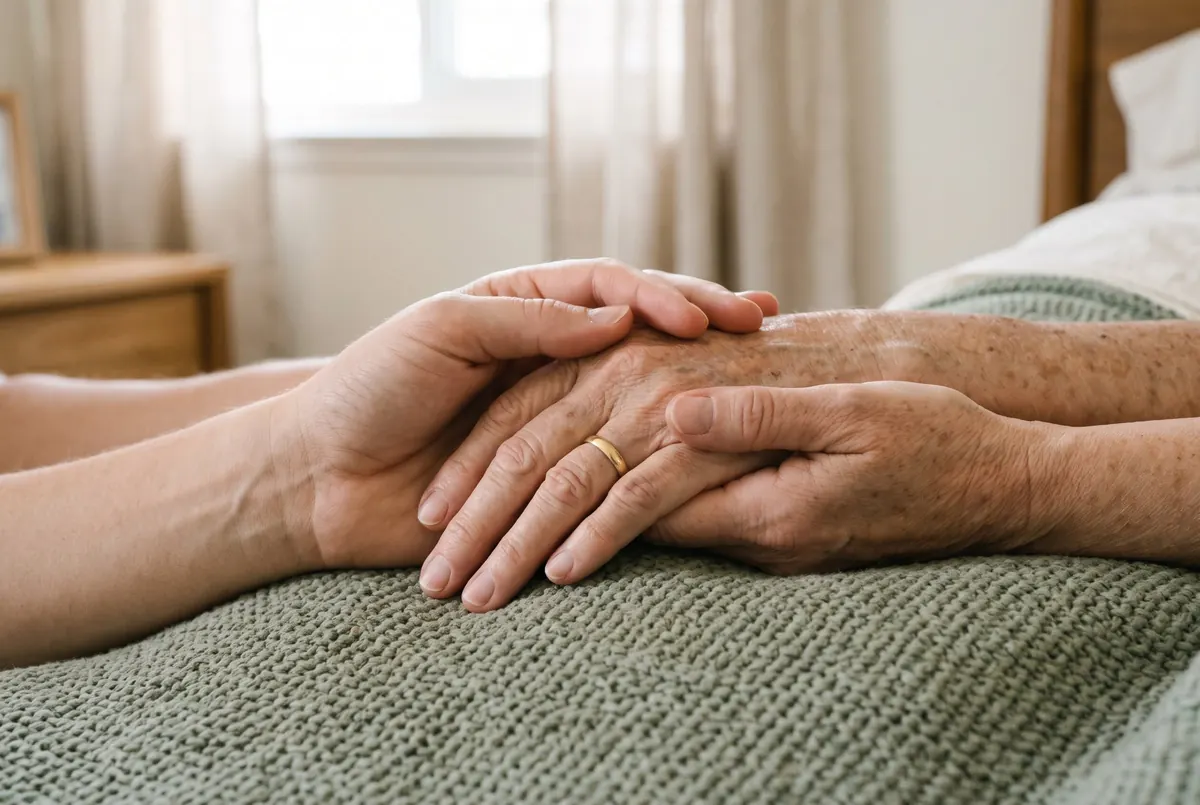
In the last weeks
- Sleeping much more, and being harder to wake.
- Eating and drinking less. This is the body's way of slowing down, not starving.
- Pulling back from visitors, TV or conversation.
- Talking about trips, or about people who have already died.
In the last days
- Breathing changes: long pauses, then a few fast breaths.
- A rattling sound from saliva in the throat. It usually bothers the family more than the person. The nurse can help.
- Hands, feet and knees feeling cool, or looking blotchy and purple.
- Less urine, and darker urine.
- Restlessness or confusion, sometimes picking at sheets.
- Eyes partly open, or not responding to voices.
What the hospice team does
- Adjusts medicine for pain, breathing and restlessness.
- Shows you mouth care and how to turn your person gently.
- Visits more often, and can stay longer during a crisis.
- Answers the phone when you are not sure what you are seeing.
Can they hear me?
Hearing is thought to be one of the last senses to fade. Keep talking to your person, say what you want to say, and let them hear familiar voices and music.
How long does the last stage last?
It can be a few hours or a couple of weeks. Your hospice nurse can give you a better sense as things change, and will tell you if it may be time to call family.
Talk it through with a hospice nurse
Call Comforting Care Hospice in Simi Valley.
How this page was written
- Public sourcesEvery fact comes from a public source, such as Medicare.gov or California state records.
- Plain wordsWe rewrite those facts in short, simple sentences that families can use.
- Checked and datedWe check each fact against its source and look again when Medicare rules change.
Sources last checked November 2026.
Where this information comes from
This guide is general information. For your person's care, talk with their doctor or a hospice nurse.