End of life care
End of life care is comfort and support in the final months of a serious illness. It puts comfort first, easing pain and breathing so your person can rest. It also guides your family through each step, so nobody has to figure it out alone.
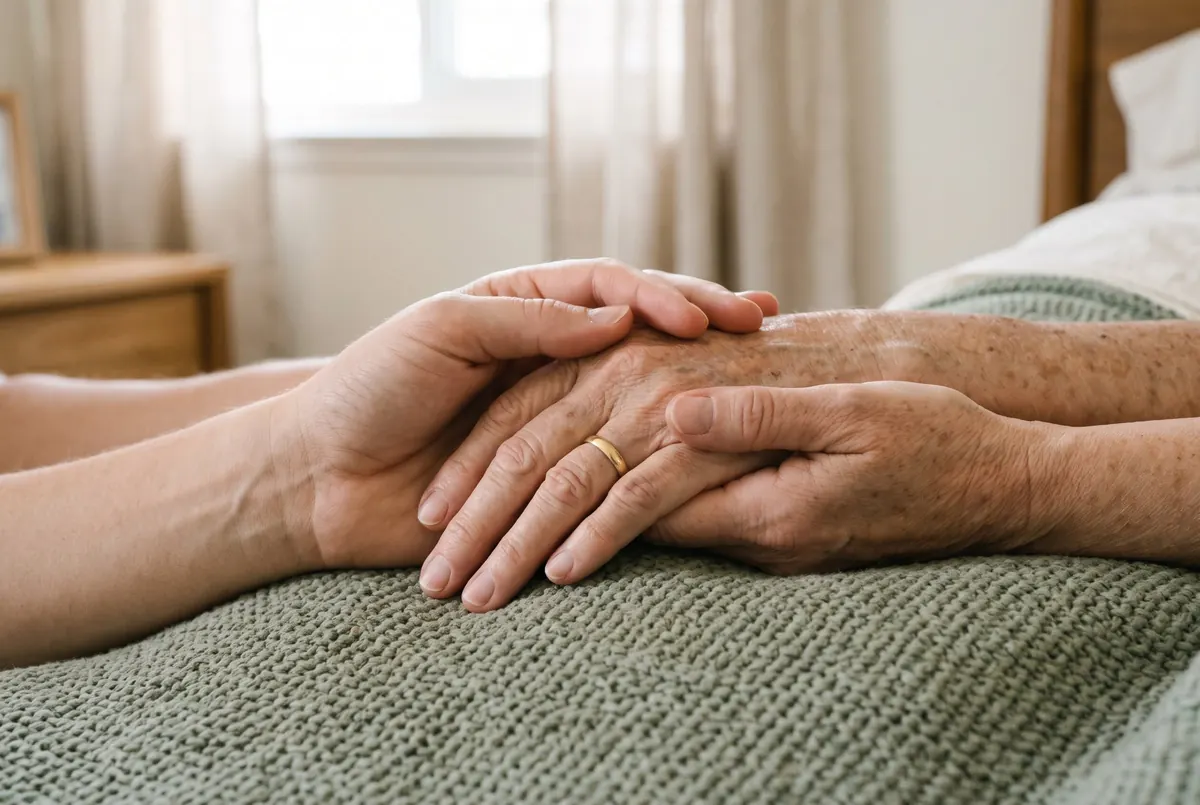
What is end of life care?
This kind of care changes the goal from curing an illness to living as well as possible. The focus becomes ease, dignity and time with the people your person loves.
It cares for the whole person
Physical comfort matters, and so do fear, loneliness and faith. The team looks after body, mind and spirit together.
It supports the family too
Caregivers get teaching, practical help and someone to call. Hospice teams also offer grief support after a death.
Choosing comfort lets the care match what your person wants most right now.
Who provides care at the end of life?
Most of this care comes from a hospice team that works side by side with your family.
- A hospice doctor and nurses, who manage pain and symptoms and visit on a schedule
- Hospice aides, who help with bathing, dressing and other personal care
- A social worker and a chaplain, for planning, worries and spiritual needs
- Trained volunteers, who can sit with your person or give you a short break
- Family and friends, who often give daily care with the team's guidance
A palliative team may help earlier, while treatment is still going on.

Where can end of life care happen?
Comfort can follow your person almost anywhere they live. The team comes to them, so a move is often not needed.
- At homeYour person stays in their own bed, with their own routines and pets nearby.
- Assisted livingThe hospice team visits and works alongside the community's staff.
- Nursing homeHospice visits are added on top of the daily care the facility already gives.
- HospitalA short hospital stay is possible when the hospice team arranges it.
- Inpatient hospiceA stay in a hospice facility when symptoms cannot be managed at home.
- Respite stayA short inpatient stay that gives family caregivers time to rest.
Many families choose end of life care at home. Read about home hospice care to see how home visits work.
What does comfort care include in the last weeks?
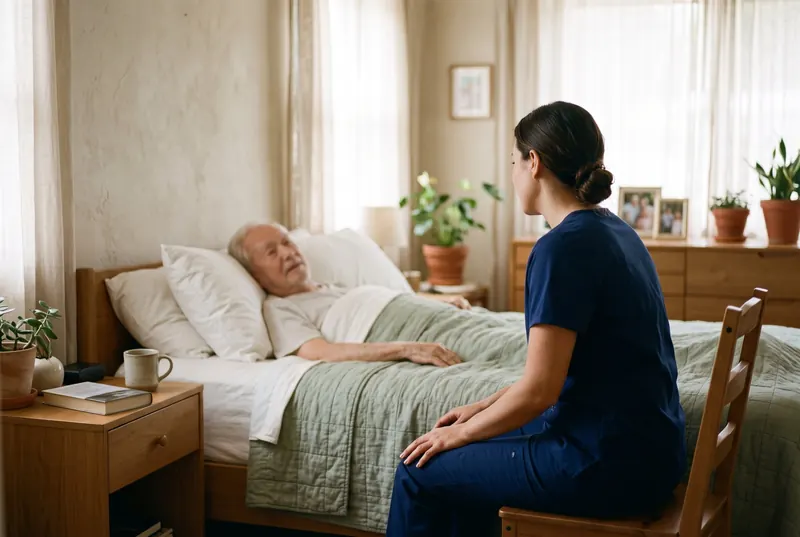
Comfort care treats how your person feels, hour by hour. Small, simple things often matter most to your person.
- Pain: medicine is adjusted often, so pain stays under control
- Breathing: raising the head of the bed or a gentle fan can ease breathlessness
- Mouth and lips: lip balm, a damp cloth or ice chips help a dry mouth
- Skin: gentle turning and moisturizer protect skin that grows fragile
- Calm: soft light, familiar music and quiet voices can soothe restlessness
- Spirit and family time: prayer, a chaplain's visit or simply sitting together
What changes can families expect?
The body slows down near the end, and every person follows their own path.
- More sleepYour person may sleep most of the day and be harder to wake.
- Less eatingHunger and thirst fade, and small sips or mouth care are enough.
- Fewer wordsTalking slows, but your voice and touch can still bring comfort.
These end of life signs are a normal part of dying. The nurse will explain each change and what usually comes next.
Our guide on what to expect at the end of life explains each change. It also walks through the end of life stages in order.
How much does end of life care cost?
For a person on hospice, the Medicare hospice benefit pays nearly all of it.
How the cost of end of life care is usually covered
- Medicare hospice benefit
- Nothing for covered hospice care, including the team, equipment, supplies and symptom medicine.
- Prescriptions
- Up to $5 for each outpatient prescription for pain or symptom relief.
- Respite care
- Five percent of the Medicare approved amount for a short inpatient respite stay.
- Room and board
- Medicare does not cover it, except during short inpatient or respite stays. In a nursing home, the family usually pays this part.
- Medi-Cal and private insurance
- Medi-Cal offers a hospice benefit, and many private plans cover hospice too. Ask about copays.

Is end of life care the same as hospice?
Not quite, although the two overlap a great deal. One is a broad name for comfort near the end, and the other is a defined program.
End of life care
- Any care that puts comfort first near the end
- Can come from hospice, palliative or hospital teams
- No formal rules to qualify
- Paid in different ways, depending on the setting
Hospice
- For a doctor's expected life span of six months or less
- Treatment meant to cure the illness stops
- A full team visits wherever your person lives
- The Medicare hospice benefit pays nearly all costs
Hospice is one way to receive end of life support. Families who are not ready for hospice can start with palliative care instead.
Questions about end of life care
What does comfort care mean?
It means treating symptoms rather than the illness itself. The goal is ease, rest and dignity.
Can last stage care happen at home?
Yes. Medicare says hospice care is usually given at home or wherever your person lives.
How long can someone stay on hospice?
There is no fixed limit on hospice care. Care can continue past six months if a hospice doctor recertifies your person.
Can your person stop hospice?
Yes. Your person can leave hospice at any time and return to regular Medicare coverage.
Are end of life services in a nursing home covered?
Medicare covers the hospice visits, care and supplies. It does not pay for room and board in the facility.
Who decides when it is time for hospice?
Your person, your family and the doctor decide together. Read when is it time for hospice for signs to watch.
End of life care near you
Other hospice services
Call Comforting Care Hospice in Simi Valley.
How this page was written
- Public sourcesEvery fact comes from a public source, such as Medicare.gov or California state records.
- Plain wordsWe rewrite those facts in short, simple sentences that families can use.
- Checked and datedWe check each fact against its source and look again when Medicare rules change.
Sources last checked November 2026.
Where this information comes from
- National Institute on Aging: providing care and comfort at the end of life
- National Institute on Aging: questions about hospice care
- Medicare.gov: hospice care coverage
- California DHCS: Medi-Cal hospice
This guide is general information. For your person's care, talk with their doctor or a hospice nurse.