Home hospice care
Nurses and aides visit at home and bring the bed, oxygen and supplies your person needs. A hospice nurse is on call day and night.
Hospice in assisted living
When someone you love is very sick, comfort can matter more than another treatment. This guide explains hospice care in Simi Valley in plain words. A local hospice nurse can answer your questions by phone.
Hospice care is medical care for someone with a serious illness who now wants comfort more than a cure. Nurses, aides, a social worker and a chaplain come to them. Home might be a family house in Wood Ranch or a room in assisted living.
Medicare Part A pays for hospice from a certified provider. The benefit covers visits, comfort medicine, and equipment such as a hospital bed. Most families pay little or nothing. Medi-Cal and most private plans cover it too.
Every hospice program includes the same core care. These four hospice services are the ones families in this area search for most.
Nurses and aides visit at home and bring the bed, oxygen and supplies your person needs. A hospice nurse is on call day and night.
Hospice in assisted livingComfort focused care for a serious illness, even while treatment continues. It can begin well before hospice is part of the talk.
What palliative care coversSupport for late stage dementia and Alzheimer's, at home or in memory care. The team helps with eating, sleep, restlessness and family strain.
When dementia qualifiesGuidance for the last weeks and days. Families learn which changes to expect and how to keep their person calm and comfortable.
What end of life care meansStart at the beginning, or go straight to where you are today.

How to know it is time, what Medicare pays, and what to ask any hospice before you choose.
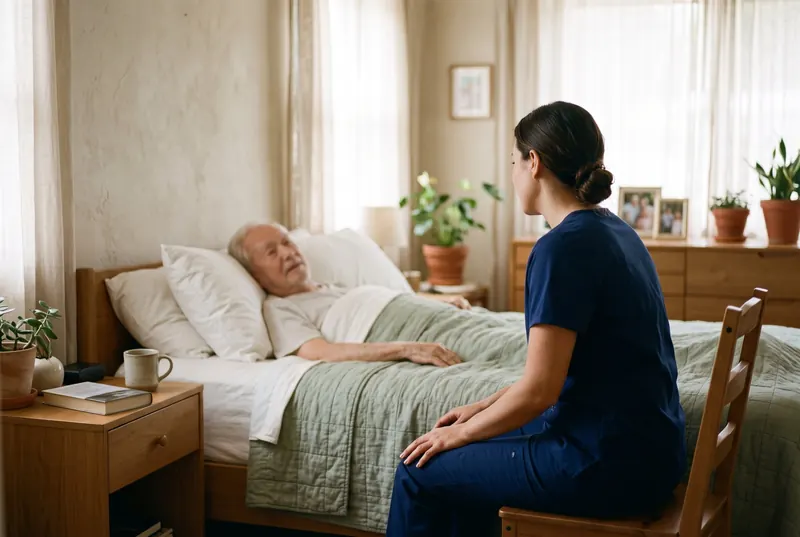
What happens after you call, and what care looks like at home, in assisted living, or in a nursing home.

The changes families notice near the end, and how to spend that time together.

What to do when your person dies, and the grief support hospice gives your family afterward.
Hospice is a service, not a place. The same team visits your person wherever they live.

Visits start from the office on Erringer Road. Each drive time below is measured from that office, without heavy traffic.
Nearly all of it. Medicare Part A pays for hospice visits, comfort medicine, equipment and supplies. You may pay up to $5 for each prescription for pain or symptoms, and a small share of respite care. Room and board in a nursing home is not part of the benefit. What Medicare pays for hospice
First, a doctor confirms the illness is terminal, which usually means six months or less if it follows its normal course. Second, your person, or the person who speaks for them, chooses comfort care over treatment meant to cure that illness. When it is time for hospice
It is a Medicare billing rule for hospices, not a limit on your family. A hospice can bill no more than 20 percent of its patient days as inpatient care. Most hospice care happens at home, and your person can still get inpatient care in a crisis.
As long as they still qualify. Medicare pays in two 90 day periods, then any number of 60 day periods. Some people are on hospice for days, others for many months, and some improve and leave.
Hospice stops treatment aimed at curing the terminal illness, and that can be hard to accept. It also does not include an aide in the home around the clock, so family members still give much of the daily care. Room and board in a care facility is not covered.
No. The goal changes to comfort, so your person can spend the time they have feeling as well as possible.
Yes. You can stop hospice at any time and go back to regular treatment. You can start again later if your person still qualifies.