End of life care in Simi Valley, at home and close to family
End of life care in Simi Valley keeps a dying person comfortable and helps the family know what to do. Most of it happens at home, with nurses and aides who visit and a nurse on the phone at night. Medicare pays for nearly all of it through the hospice benefit.
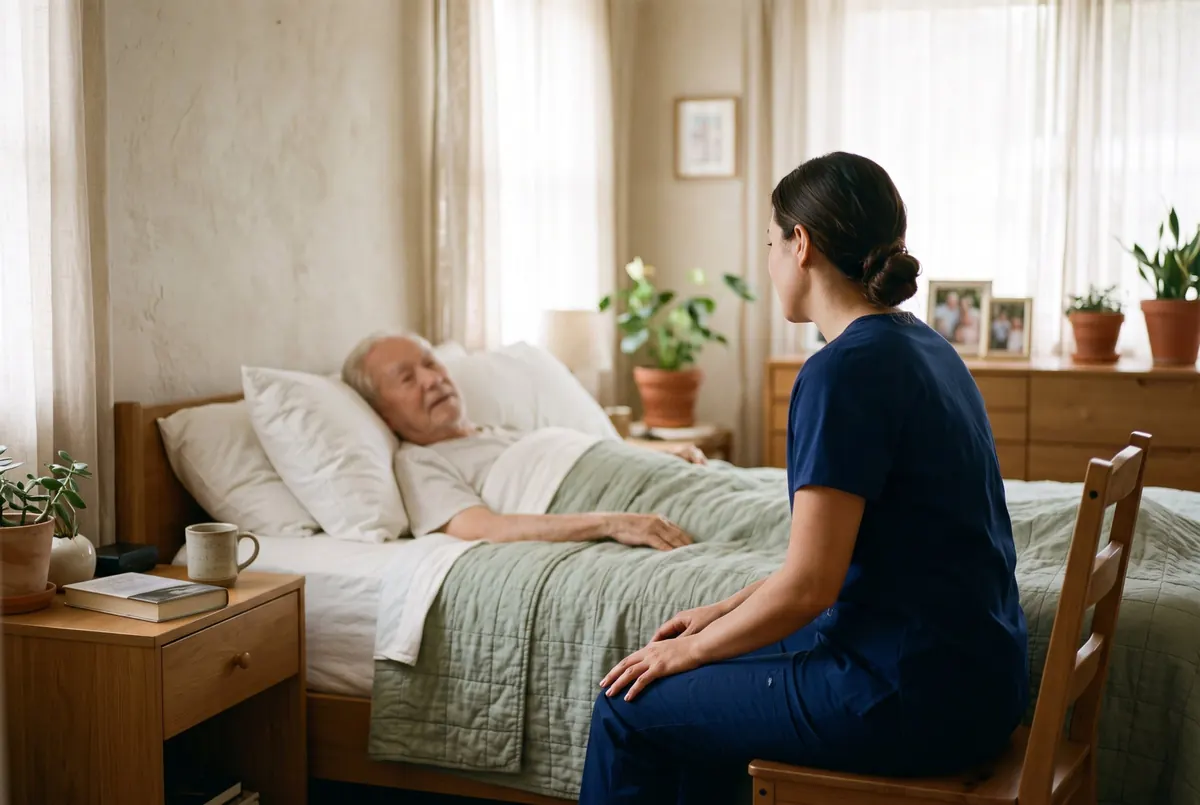
What end of life support covers
This care begins when the focus moves from fighting an illness to easing it. Pain, breathing and fear come first. The people who love your person get steady guidance too.
For the person who is dying
Medicine for pain and breathlessness, a clean and soft bed, and a calm room. Faith and old memories get space as well.
For those keeping watch
Families learn what each change means and who to call. Grief support carries on after the death.
You do not have to know what to do. A nurse walks you through each stage as it comes.
What the last days at home often look like
Every death is different. Still, the body tends to slow down in ways a nurse can explain ahead of time.
- Long hours of sleep, with short, foggy waking moments
- Little interest in food or water, which is part of the body shutting down
- Breathing changes, such as pauses or a rattle from fluid in the throat
- Cool hands and feet, sometimes with blotchy skin on the legs
- Restless moments, like picking at sheets or reaching for the air

Simple things help. Moisten the lips, keep the room quiet and keep talking to your person. Hearing may stay long after speech is gone. Our guide on what to expect near the end covers each change in more detail.
Who comes to help with care at the end of life
A hospice team usually gives this care, with family at the center of it.
- NurseVisits on a schedule and comes more often as the end gets close.
- AideBathes your person, changes linens and helps with gentle turning.
- DoctorApproves comfort medicines and oversees the plan with your person's own doctor.
- Social workerHelps with forms, funeral planning and family worries.
- ChaplainOffers prayer or quiet company for any faith, or none.
- VolunteerSits with your person so a caregiver can sleep or run errands.
Comfort care at home, in a care home or near the hospital
Many people hope to spend their last days at home. The team can make that possible in a house in Wood Ranch, an apartment near Santa Susana, or a guest room at a grown child's place.
- Care homes: 61 licensed homes for older adults operate in the city, and hospice can visit residents there
- Nursing home: Simi Healthcare Center on East Los Angeles Avenue is the city's one skilled nursing facility
- Hospital: Adventist Health Simi Valley is about 4 minutes from the hospice office on Erringer Road
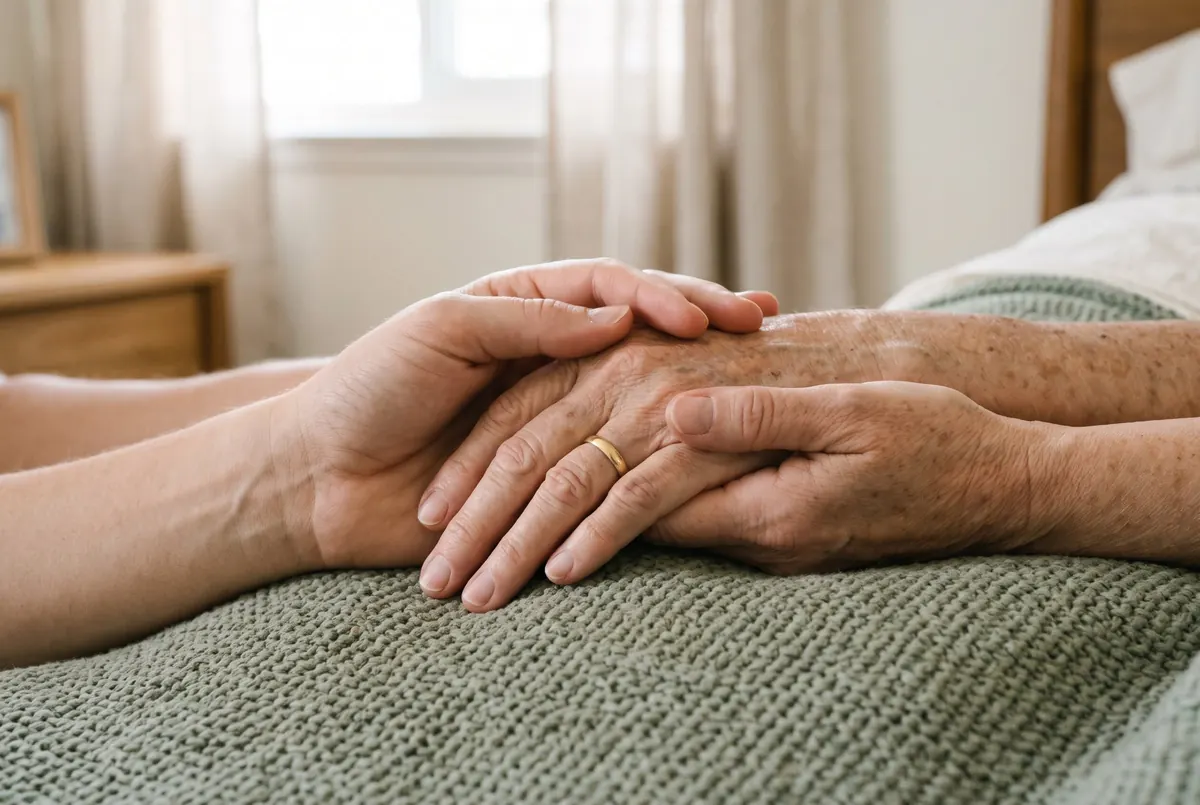
A hospital stay is not always needed near the end. If symptoms get out of hand, call the hospice nurse first. The nurse can often fix the problem at home, or arrange a short inpatient stay. Calls go to Comforting Care Hospice.
How much end of life services cost
With hospice, most families pay very little. The rules below come from Medicare's hospice booklet.
Who pays for what
- Medicare Part A
- Pays for hospice visits, the bed, oxygen, supplies and comfort medicine.
- Prescriptions
- Your person may pay up to $5 for each pain or symptom prescription.
- Respite stays
- About 5 percent of the Medicare approved amount for a short stay.
- Medi-Cal
- Has its own hospice benefit, and most private plans cover hospice as well.
- Room and board
- Not covered in a nursing or care home. The family usually pays that part.

Is last stage care the same as hospice?
The two overlap. End of life care is a broad term, and hospice is the Medicare program that most often delivers it.
End of life care
- Any care that puts comfort first near death
- Can come from a hospital, palliative or hospice team
- No formal entry rules
Hospice
- A doctor expects six months or less
- Cure is no longer the aim
- A full team, paid by the Medicare hospice benefit
Not ready for hospice yet? Palliative care in Simi Valley can help sooner.
When you are ready to talk
- Make one callTell a hospice nurse who your person is and where they are now.
- A nurse visitsThe nurse sees your person and contacts the doctor for you.
- Equipment arrivesA bed, supplies and comfort medicine come to the home, usually within a day or two of your call.

Family caregivers can lean on local help too. Senior Concerns serves east Ventura County at 805-497-0189. The Ventura County Area Agency on Aging offers caregiver respite, plus free counseling about care home moves, at 805-477-7300.
Questions about end of life care in Simi Valley
What are the signs that death is near?
Common signs include much more sleep, very little eating and drinking, and changes in breathing. Hands and feet may feel cool. A nurse can tell you which changes to expect next.
Can someone in Simi Valley die at home with hospice?
Yes. Hospice brings the bed, medicine and visits to the home. A nurse is on call day and night if anything changes.
Should we call 911 when our person is dying at home?
If your person is on hospice, call the hospice nurse first. The nurse can guide you and come out. Calling 911 may lead to a hospital trip your person did not want.
How long does the dying process usually last?
It varies a great deal. The last stage can last days or a couple of weeks. The nurse watches for signs and keeps the family updated.
Is end of life care free under Medicare?
Nearly. Covered hospice care costs nothing, apart from small prescription copays and a share of respite stays. Room and board in a facility is not covered.
Does Medi-Cal pay for comfort care at the end of life?
Yes. Medi-Cal offers a hospice benefit much like Medicare's. People with both can use them together.
Can hospice care happen at Simi Healthcare Center?
Hospice can visit residents in nursing homes. Ask the facility and the hospice how they handle visits before care begins.
What if our person wants to stay in their care home?
Most can stay. The hospice team visits the care home and works beside its staff. Ask the home's director to confirm first.
Will my person feel pain at the end?
The team works to keep pain under control. Medicines are adjusted often, and the nurse teaches you how to give them.
Why does my person stop eating near the end?
The body needs less as it slows down. Forcing food can cause discomfort. Small sips and mouth care are usually enough.
What is the rattle in breathing near death?
It is often fluid in the throat that your person cannot clear. It can sound worse than it feels. Turning them or a medicine can help.
Can family stay in the room the whole time?
At home, yes. In a care home or nursing home, ask about overnight visits. Many places make room for family at the end.
What happens right after a death at home on hospice?
Call the hospice nurse. The nurse confirms the death, helps with the paperwork and calls the funeral home you chose.
Is end of life care only for cancer?
No. It helps people with heart failure, lung disease, dementia, kidney failure and many other illnesses.
How do I find end of life care near me?
Ask your person's doctor, or call a hospice directly. A nurse can usually visit for an evaluation soon after you call.
Is grief support offered after a death?
Yes. Medicare hospices offer grief support to the family for up to a year after a death.
More hospice help in Simi Valley
See end of life care for Thousand Oaks families, or the general end of life care page.
Call Comforting Care Hospice in Simi Valley.
How this page was written
- Public sourcesEvery fact comes from a public source, such as Medicare.gov or California state records.
- Plain wordsWe rewrite those facts in short, simple sentences that families can use.
- Checked and datedWe check each fact against its source and look again when Medicare rules change.
Sources last checked November 2026.
Where this information comes from
- National Institute on Aging: providing care and comfort at the end of life
- National Institute on Aging: questions about hospice care
- MedlinePlus: end of life issues
- Medicare.gov: hospice care coverage
- Medicare hospice benefits booklet
- California DHCS: Medi-Cal hospice
- HCAI: licensed healthcare facility listing
- California Department of Social Services: community care licensing facilities
- Ventura County Area Agency on Aging: caregiver services
This guide is general information. For your person's care, talk with their doctor or a hospice nurse.