End of life care in Thousand Oaks
End of life care in Thousand Oaks keeps your person comfortable in their final weeks. A hospice team treats pain and breathlessness and shows the family what to do. Most of it happens at home, and Medicare pays for nearly all of it.

What end of life support means for your family
At some point, more treatment brings more burden than benefit. Care then turns toward ease, rest and time together. That shift is what people mean by care at the end of life.
For your person
Symptoms are treated quickly, and wishes about place and visitors are respected.
For everyone around them
Relatives learn what each change means, so the final days feel less frightening.
Hospice is the most common way families receive this care. A doctor must expect six months or less for it to begin.
What are the signs that the last days are near?
The body slowly winds down, and each person does it in their own way. These changes are common and expected.
- Long hours of sleep. Your person may be hard to wake and drift off mid sentence.
- Little interest in food. Hunger and thirst fade, and a few sips can be plenty.
- Quieter speech. Words come slowly or stop, yet a familiar voice can still soothe.
Ask the hospice nurse about anything that worries you. They can explain what a change means and what often follows. What to expect near the end
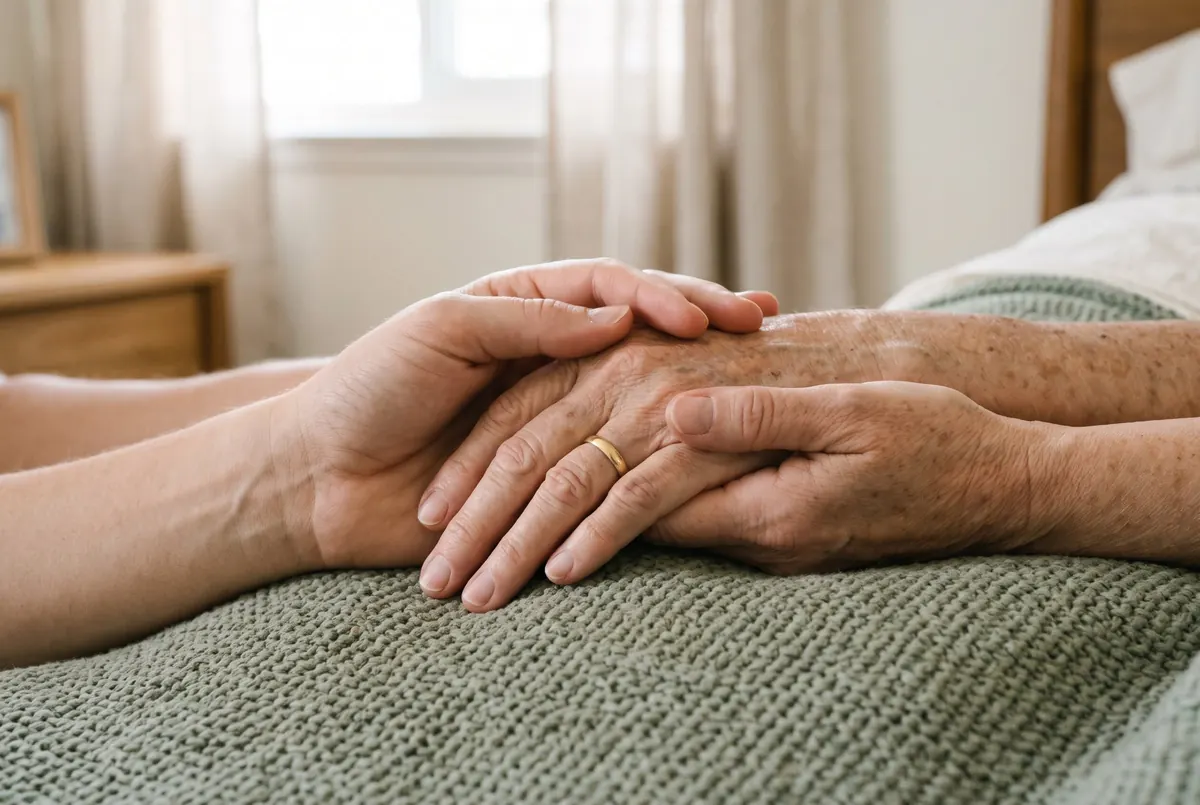
Comfort care you can give at home
The nurse handles medicine. Families often ask what they can do with their own hands. Here are simple things that help.
- Easier breathingRaise the head of the bed, or point a small fan toward the face.
- A moist mouthUse a damp swab, ice chips or lip balm when sips are too much.
- Gentle skin careTurn your person slowly every few hours and smooth on lotion.
- A calm roomSoft lamps, favorite music and low voices can quiet restlessness.
- Faith and familyPrayer, a visit from clergy or just sitting close all count.
If pain breaks through, call the hospice line at any hour. The nurse may change a dose by phone or come to the house.

Where end of life care in Thousand Oaks takes place
Your person does not have to move to receive comfort care. The team travels to them, whether that is a bedroom upstairs or a care home down the road. Choose the place where your person feels most at ease.
- A family home, with a hospital bed set up wherever they rest best
- Assisted living or board and care, beside the staff already there
- A nursing home, with hospice visits added to the daily care
- A short inpatient stay, arranged by the hospice when symptoms cannot be handled at home
How is last stage care paid for?
Under the Medicare hospice benefit, the team, supplies and symptom drugs cost the family nothing, or close to it. Prescriptions carry a copay of $5 at most.
End of life care
- A broad name for comfort near the end
- May come from many kinds of teams
- Payment depends on who gives it
Hospice
- A defined Medicare program
- Needs a six month outlook from doctors
- The hospice benefit covers nearly all costs
Medi-Cal has its own hospice benefit, and many private plans cover hospice. Room and board in a facility is not part of the Medicare benefit.
Support for the family after a death
The hospice keeps in touch after your person dies and offers grief support. Two places in town can help with what comes next.
- Goebel Adult Community Center, 1385 E Janss Rd, (805) 381-2744. Senior meals and social services, open Monday to Saturday.
- Senior Concerns, 401 Hodencamp Rd, (805) 497-0189. Care management and a caregiver support center.
A surviving spouse may suddenly be living alone. A meal program or a weekly class can bring back some routine. Grief support from hospice

Starting comfort care with one call
- Share the basicsWho your person is, their illness and where they are staying.
- A nurse visitThe nurse checks symptoms and confirms with the doctor that hospice fits.
- Comfort arrivesMedicine, a bed and a visit schedule come next.

Calls go to Comforting Care Hospice. Once care starts, a nurse is on call at any hour.
Questions about end of life care in Thousand Oaks
What are the signs that death is days away?
Deep sleep for most of the day, very little eating and few words are common. The nurse can tell you what they see in your person.
Should we keep offering food when my person stops eating?
Offer small tastes only if they seem to want them. A fading appetite is part of the body slowing down.
Can my person still hear us?
Many families keep talking and holding hands until the end. Your voice can bring comfort even when there is no reply.
What does comfort care mean in practice?
It means treating pain, breathlessness and worry rather than the disease. Tests and hospital trips that do not add comfort are usually dropped.
Is end of life care the same as hospice?
Hospice is one kind of it, with set rules and a team. End of life care is the wider idea of comfort near death.
Can end of life care happen at home in Thousand Oaks?
Yes, and most of it does. The hospice brings the bed, supplies and medicine to the house.
What if pain gets worse at 2 in the morning?
Phone the hospice line. A nurse can guide you over the phone or drive out to the house.
Who do we call when death happens at home?
Call the hospice nurse first, not 911. The nurse comes to the house and helps with the next calls. When a death happens at home
Should we call 911 if breathing changes?
Call the hospice instead. Changes in breathing are common near the end, and the nurse knows how to ease them.
Does Medicare pay for end of life services in a nursing home?
It pays for the hospice visits, medicine and supplies. Rent for the room and meals is not covered.
What is general inpatient care?
It is a short stay in a hospital or nursing home bed. The hospice arranges it when symptoms are too hard to control at home.
Can we have a chaplain from our own faith?
Yes. The hospice chaplain serves any faith or none, and your own clergy are welcome to visit.
How long does the dying process take?
There is no fixed timeline. Some people decline over weeks, others over a few days.
Can my person leave hospice to go back to the hospital?
Yes. They may stop hospice at any time and return to their regular Medicare coverage.
Is it normal to sleep most of the day?
Yes. Energy drops sharply in the final weeks. Short, quiet visits are often best.
Where can families find support after a loss in Thousand Oaks?
Start with the hospice grief program. Senior Concerns and the Goebel center on Janss Road also offer services for older adults.
Other hospice services in Thousand Oaks
End of life care is also explained for Simi Valley families, and in general on the end of life care page.
Call Comforting Care Hospice in Simi Valley.
How this page was written
- Public sourcesEvery fact comes from a public source, such as Medicare.gov or California state records.
- Plain wordsWe rewrite those facts in short, simple sentences that families can use.
- Checked and datedWe check each fact against its source and look again when Medicare rules change.
Sources last checked November 2026.
Where this information comes from
- National Institute on Aging: providing care and comfort at the end of life
- National Institute on Aging: questions about hospice care
- MedlinePlus: end of life issues
- Medicare.gov: hospice care coverage
- California DHCS: Medi-Cal hospice
- Conejo Recreation and Park District: Goebel Adult Community Center
- Ventura County Area Agency on Aging: caregiver services
This guide is general information. For your person's care, talk with their doctor or a hospice nurse.