Home hospice care in Thousand Oaks
Home hospice care in Thousand Oaks lets your person rest in their own bed while a team handles the medical side. Nurses and aides come to the house on a set schedule. A nurse answers the phone at any hour, and Medicare covers almost every cost.
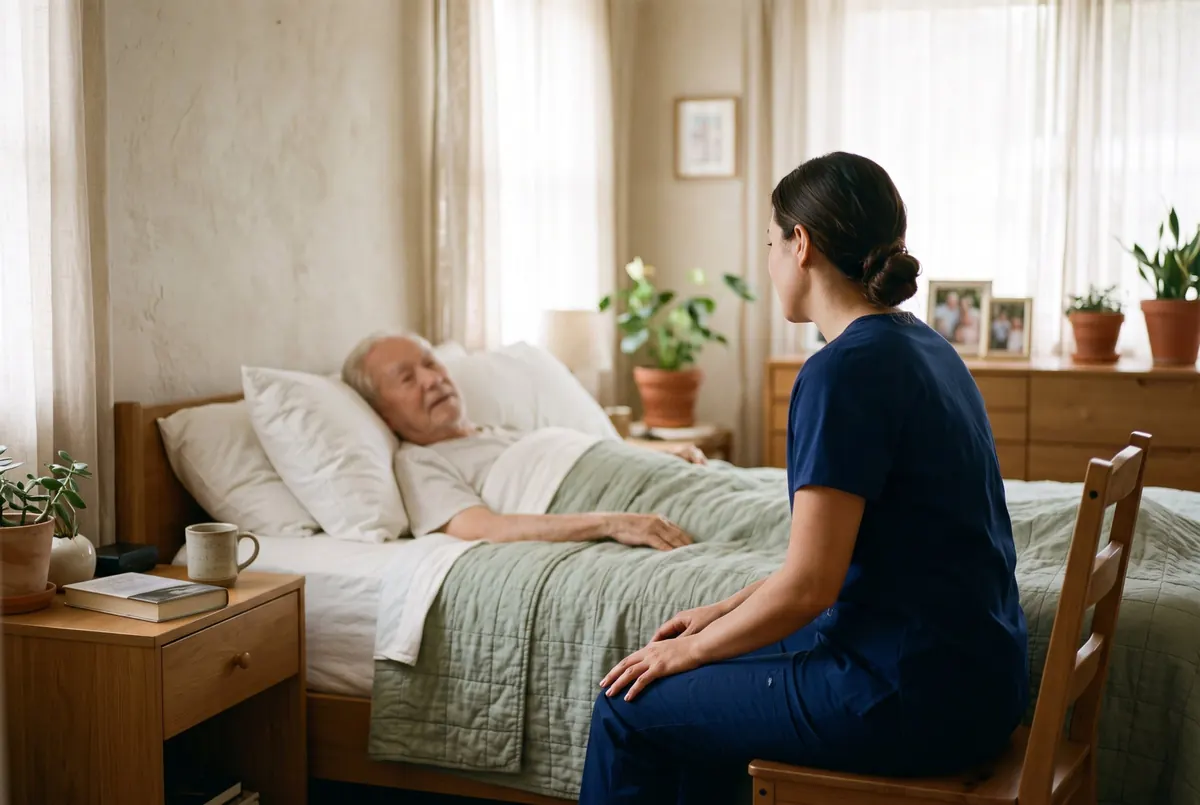
What hospice at home looks like in Thousand Oaks
Picture your person in their favorite room, with family close by. The hospice team comes to them, so nobody has to drive to appointments. Care is planned around comfort and the things your person still enjoys.
Your family stays in charge
You decide who visits and when the house needs quiet. The team fits its schedule to your daily rhythm.
Professionals handle the hard parts
Medicines, symptoms and equipment become the hospice's job. You can go back to being a son, daughter or spouse.
Families from Newbury Park to Dos Vientos receive the same visits. The hospice office in Simi Valley is roughly 22 minutes from Newbury Park by car.
What do in home hospice services include?
The care plan lists each item, and the hospice pays for everything on that list. Most homes receive some mix of the following.
- A hospital bedDelivered and set up where your person can see the window or the family.
- Oxygen, when orderedA concentrator and tubing for shortness of breath.
- Comfort medicineDrugs for pain, nausea, anxiety and breathing, brought to the door.
- SuppliesPads, gloves, wound dressings and skin creams, restocked as they run low.
- Aide visitsHelp with bathing, shaving, hair care and fresh sheets.
- CounselingA social worker, a chaplain if wanted, and grief support for the family later.
How often does the hospice team come, and who answers at night?
Early on, a nurse may come once or twice a week. Visits grow more frequent as needs change. Aides often come several times a week for bathing.
Between visits, the phone connects you to the team. Any Medicare hospice must keep a nurse on call through the night and on holidays. If a call cannot settle the problem, a nurse can drive out.

Medicare names four levels of hospice care. Two of them happen right in the house.
Routine home care
- The usual level for most families
- Scheduled visits from the team
- Relatives cover daily care in between
Continuous home care
- Saved for a short medical crisis
- A nurse stays for long blocks of time
- Stops once symptoms calm down
The other two levels take place in a facility. General inpatient care handles symptoms too hard for the house. Inpatient respite gives the caregiver a few days off.
Home can mean a care home too
Under Medicare, home is wherever your person lives. In this city that might be a family house, a small board and care home or a large community.
- A family house or apartment, including a parent's room in a grown child's home
- One of 74 small care homes in the city, each licensed for six residents or fewer
- One of 12 large communities, all of which hold a state hospice waiver
- One of 4 nursing homes with a city address, where hospice adds its own team
A small care home needs its own waiver before a resident can stay on hospice there. Ask the owner about it on your first call.
What does home hospice care in Thousand Oaks cost with Medicare?
Medicare Part A pays the hospice a daily rate. That rate covers the team, the equipment and the comfort drugs. Your share is small.
Your share under Medicare
- Deductible
- Zero. The hospice benefit has no yearly deductible to meet first.
- Comfort drugs
- A copay of $5 at most for each outpatient prescription.
- Respite stays
- Five percent of the Medicare approved amount for each inpatient respite day.
- Rent or room fees
- Not paid by Medicare, whether your person lives at home or in a facility.
On a Medicare Advantage plan? Original Medicare still pays for hospice. More on Medicare and cost

Rest for the person doing the caring
Caring for someone at home wears you down, even with good help. Plan breaks before you need them.
- Respite care lets your person stay up to five days in an approved facility while you sleep.
- Hospice volunteers can sit with your person so you can shop or take a walk.
- The Senior Concerns Caregiver Support Center takes calls at (805) 497-0189.
- The county Area Agency on Aging offers caregiver training and respite at (805) 477-7300.

First steps toward hospice at home
- Make one callTell the nurse your person's illness, address and doctor.
- Doctors sign offTwo doctors confirm a life span of six months or less is likely.
- The house is set upEquipment arrives, and a nurse reviews every pill bottle on the counter.
- A visit planYou agree on days and times that suit the household.

Calls go to Comforting Care Hospice. The nurse can explain how quickly visits might begin for your family.
Questions about home hospice in Thousand Oaks
How often will a hospice nurse come to our house?
The care plan sets the schedule, often weekly at first. Visits increase when pain or breathing gets harder to manage.
Will hospice send someone to stay overnight?
Usually not. A nurse stays for long stretches only during a short crisis, which Medicare calls continuous home care.
Who pays for the hospital bed and oxygen?
The hospice does, when the care plan lists them. You should not get a separate bill for that equipment.
Does home hospice cost anything with Medicare?
Very little. Expect up to $5 per comfort prescription and a small share of any respite stay.
Does Medi-Cal pay for in home hospice care?
Yes. Medi-Cal has its own hospice benefit with similar services. People with both Medicare and Medi-Cal use Medicare first.
Can hospice at home work if I am the only caregiver?
It can, though you will need breaks. Tell the social worker early so volunteers and respite can be planned.
My father lives with us in Newbury Park. Can he get hospice there?
Yes. Hospice comes to whatever home your person lives in, including a grown child's house.
What if my person needs to go to Los Robles Hospital?
Call the hospice before calling 911 if you can. The hospice arranges hospital care linked to the hospice illness. Original Medicare still covers problems that are unrelated.
How long can someone receive home hospice services?
Medicare allows two 90 day periods, then an unlimited number of 60 day periods. A doctor must recertify your person each time.
What are the four levels of hospice care?
Routine home care, continuous home care, general inpatient care and inpatient respite. Most families only ever use routine home care.
Will an aide help with bathing?
Yes. Hospice aides help with baths, shaving, mouth care and changing linens. The care plan sets how often they come.
What happens if my person gets better on hospice?
They can leave hospice and go back to regular Medicare. If they decline later and qualify again, they can return.
How many hospice agencies serve Thousand Oaks?
State records list 12 licensed hospices with a city address and 3 more in Newbury Park. Medicare Care Compare shows survey results for each one.
Can we move from home to a care home during hospice?
Yes. The hospice follows your person to the new address. Check first that the home holds a hospice waiver.
What should we have ready for the first visit?
Gather every medicine bottle, insurance cards and the doctor's name. Bring out any advance directive or POLST form you have.
Is hospice care near me available on weekends?
Yes. The on call nurse works weekends and holidays. Routine visits are usually planned for weekdays.
Other hospice services in Thousand Oaks
Hospice at home is also covered for Simi Valley families, and in general on the home hospice care page.
Call Comforting Care Hospice in Simi Valley.
How this page was written
- Public sourcesEvery fact comes from a public source, such as Medicare.gov or California state records.
- Plain wordsWe rewrite those facts in short, simple sentences that families can use.
- Checked and datedWe check each fact against its source and look again when Medicare rules change.
Sources last checked November 2026.
Where this information comes from
- Medicare.gov: hospice care coverage
- Medicare hospice benefits booklet
- CMS: hospice payment and levels of care
- California DHCS: Medi-Cal hospice
- California Department of Social Services: community care licensing facilities
- California Department of Public Health: CalHealthFind
- Ventura County Area Agency on Aging: caregiver services
This guide is general information. For your person's care, talk with their doctor or a hospice nurse.